
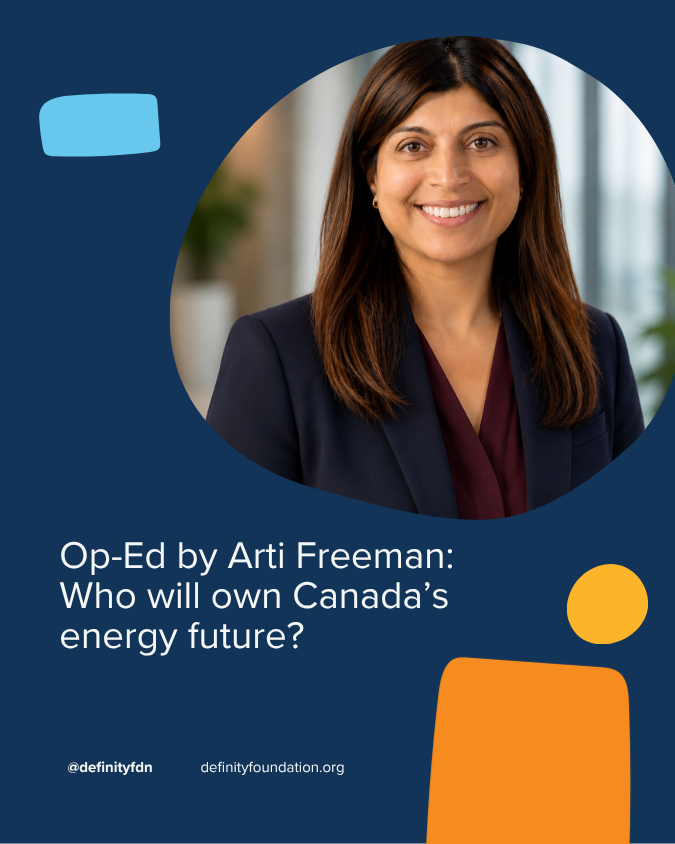
If we are going to build the next generation of infrastructure, we should also ask: Who benefits from it? Who owns it? And do the systems we create leave communities and ecosystems healthier and more resilient than before?
Read the op-ed published in the Hamilton Spectator
Canada is entering a new era of nation-building.
From electricity grids and critical minerals to housing retrofits, clean industry, and energy infrastructure, governments across the country are increasingly recognizing Canada as an “energy superpower.”
We have a rare opportunity right now to shape what kind of future this next era of building creates – because the opportunity is bigger than just building new energy sources. It is moving from extractive systems toward regenerative ones, where it’s possible to generate power while also providing benefit to the surrounding environment and uplifting communities.
For too long, our economy has largely been built around extraction. And yes, we need to be pragmatic: the batteries needed for electrification will require resource development of critical minerals. But even while we’re extracting resources, there is an approach that better recognizes land, water, air, and communities as relationships to steward – not just inputs on a balance sheet.
It’s about community ownership, shared decision-making, and long-term accountability, because stewardship without shared ownership and accountability is insufficient.
If we are going to build the next generation of infrastructure, we should also ask: Who benefits from it? Who owns it? And do the systems we create leave communities and ecosystems healthier and more resilient than before?
For decades, many Canadians have experienced energy systems as something distant and centralized, large projects where wealth often leaves communities while locals absorb the risks and impacts.
The stakes of getting this right are especially clear in the North. In mid-May, the federal government released Canada’s National Electricity Strategy, including plans to double the country’s electricity grid by 2050 at a cost of more than one trillion dollars. But many northern and remote communities (where diesel dependence is still widespread and electricity costs are among the highest in the country) risk being left out of the transition again.
If Canada wants a more resilient and democratic energy future, communities need real opportunities to own, generate, store, and benefit from energy locally, while also helping shape how that energy is produced and how land, water, and air are protected for future generations.
Projects like the Wataynikaneyap transmission line in northern Ontario, or the Three Nations Energy (3NE) solar project at Fort Chipewyan in northern Alberta, show what this future can look like. The former is majority-owned by 24 First Nations; the latter is a joint venture by three First Nations. Not only do these kinds of projects reduce diesel dependence, they also help communities build greater energy sovereignty while strengthening stewardship of the lands and ecosystems they are deeply connected to.
And for those who don’t have a history of energy development, there are organizations that help communities become developers and owners of clean-energy infrastructure across the country. Others support young people to imagine new energy futures for communities.
Initiatives like Urban Climate Leadership’s work retrofitting apartment buildings with heat pumps points to another important part of the transition: affordability and resilience. The Raven Indigenous Outcomes Fund also supports clean energy and housing retrofits to reduce energy costs and increase energy independence, among other outcomes.
Electrification cannot become something only wealthy homeowners benefit from. The transition must lower costs, improve housing, and expand access to healthier and more efficient buildings for everyone.
Even technologies like vehicle-to-grid systems point toward a different kind of future. From personal vehicles to school buses, electric vehicles can store electricity and provide backup power during outages or periods of high demand. Infrastructure is no longer just centralized and one-directional. Communities themselves can become active participants in energy ownership, including those that already have municipally-owned power grids.
These examples may seem small on their own but together they point toward something much bigger: a more distributed, democratic, and regenerative economy, one that gives back more than it takes, leaving communities stronger and more resilient over time.
Batteries, transmission lines, electric vehicles, and renewable technologies still require industrial materials and critical minerals. But if we simply replace one extractive system with another while continuing to concentrate wealth and push environmental damage onto communities and future generations, we will reproduce many of the same systems that created the problems we are now trying to solve.
The challenge is not simply building new infrastructure. It is reducing harm where possible, and ensuring communities have real power in shaping what development occurs around them.
Canada has an opportunity to lead, but only if we recognize that the energy transition is not just about changing what powers Canada, but changing who owns power in Canada.